Interactive Arabic Workbook for Kids: Making Language Learning Fun and Effective
Learning a new language can be an exciting journey, especially when it comes to children. For young learners, the process of acquiring a second language needs to be engaging, interactive, and tailored to their developmental stage. The Interactive Arabic Workbook for Kids is designed with these principles in mind. It provides a comprehensive yet playful approach to learning Arabic, making it accessible for beginners and perfect for kids who are just starting out on their language-learning adventure.
Why Choose an Interactive Arabic Workbook?
Traditional methods of teaching Arabic often rely heavily on rote memorization, which can be tedious for young learners. However, the Interactive Arabic Workbook for Kids introduces a dynamic way to learn through fun activities, visual aids, and hands-on practice. This workbook helps children develop essential skills like reading, writing, and speaking Arabic in a natural and enjoyable environment.
The use of colorful illustrations, tracing exercises, and vocabulary flashcards makes learning more engaging. Each activity is carefully crafted to reinforce key concepts while keeping the child interested and motivated. Whether used at home, in a classroom, or as part of an Islamic school curriculum, this workbook is a versatile tool that supports various learning environments.
What's Inside the Interactive Arabic Workbook for Kids?
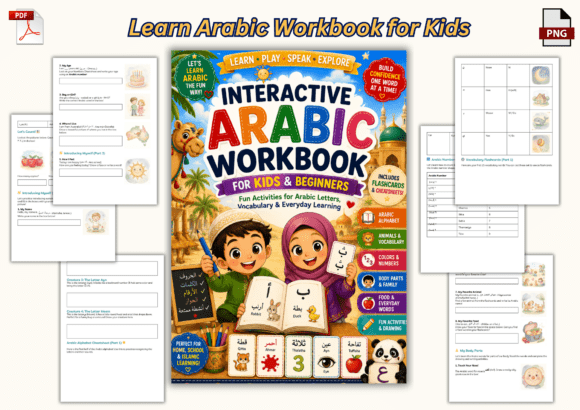
The Interactive Arabic Workbook for Kids is packed with a wide range of activities that cater to different aspects of language learning. Here’s a closer look at what you’ll find inside:
- Arabic Alphabet Practice: Children will get hands-on experience with the Arabic alphabet through tracing exercises and pronunciation guides. These activities help build confidence in recognizing and writing each letter correctly.
- Creative Letter Drawing Activities: Encouraging creativity, the workbook includes drawing prompts that allow kids to associate letters with shapes and images, reinforcing memory through visual learning.
- Vocabulary Flashcards: A set of flashcards covers essential words related to animals, colors, numbers, and everyday objects. These cards are ideal for quick review sessions and interactive games.
- Numbers 1–10 Activities: Learning to count in Arabic becomes fun with matching exercises, number tracing, and simple counting games that help children grasp numerical concepts easily.
- Introducing Myself in Arabic: This section focuses on basic conversational phrases, helping kids express themselves confidently in Arabic from the very beginning.
- Family and Body Parts Vocabulary: Through illustrated activities, children learn to identify and name body parts and family members, expanding their vocabulary in a practical context.
- Tracing, Matching, and Writing Exercises: These exercises support fine motor skills development while reinforcing spelling and handwriting techniques.
- Interactive Games and Creative Learning: The workbook includes puzzles, mazes, and other games that make learning Arabic feel less like studying and more like playing.
- Answer Key Included: Parents and teachers can easily check progress and provide immediate feedback using the included answer key.
Perfect for Various Learning Settings
The Interactive Arabic Workbook for Kids is suitable for a variety of educational settings. Whether you're homeschooling your child, teaching in a classroom, or running weekend programs, this workbook adapts seamlessly to different learning environments.
For parents, it offers a structured and engaging way to introduce Arabic to their children at home. Teachers can incorporate the workbook into their lesson plans, using its varied activities to keep students engaged and active during class. Tutors and educators working with beginner learners will appreciate the clear instructions and well-organized content that simplifies the teaching process.
Additionally, the workbook is an excellent resource for self-study learners who want to build their Arabic skills at their own pace. Its user-friendly format ensures that even those without formal training can guide their children effectively through the learning process.
Educational Benefits of the Interactive Arabic Workbook
Beyond just being fun, the Interactive Arabic Workbook for Kids offers several educational benefits that support long-term language development. Here are some of the key advantages:
- Builds Strong Arabic Alphabet Recognition: Regular practice with tracing and recognition exercises helps children become familiar with the Arabic script, laying a strong foundation for future learning.
- Encourages Beginner Speaking Skills: Through conversation starters and role-play scenarios, the workbook promotes early speaking practice, helping children gain confidence in using Arabic in real-life situations.
- Improves Vocabulary and Spelling: With a focus on daily vocabulary and spelling drills, the workbook ensures that children not only learn words but also retain them effectively.
- Supports Visual and Hands-On Learning: The use of colorful visuals and tactile activities caters to different learning styles, making it easier for children to grasp complex concepts.
- Enhances Fine Motor Skills: Tracing and drawing activities contribute to the development of fine motor skills, which are crucial for writing and overall hand-eye coordination.
- Fosters a Love for Learning: By making Arabic learning enjoyable, the workbook helps cultivate a positive attitude toward education and language acquisition from an early age.
How to Get the Most Out of the Interactive Arabic Workbook
To maximize the benefits of the Interactive Arabic Workbook for Kids, consider incorporating it into a regular learning routine. Set aside dedicated time each day for Arabic practice, and vary the activities to maintain interest and engagement.
Parents and teachers can enhance the learning experience by using the flashcards for interactive games, such as "Memory Match" or "Flashcard Bingo." Additionally, encourage children to use the vocabulary they learn in everyday conversations, reinforcing their understanding and retention of new words.
It’s also helpful to review the answer key regularly to track progress and identify areas where additional support may be needed. Celebrating small achievements, such as mastering a new letter or completing a puzzle, can boost motivation and confidence in young learners.
Whether you're looking for a fun way to introduce Arabic to your child or seeking an effective teaching aid for your classroom, the Interactive Arabic Workbook for Kids offers a valuable resource that combines education with entertainment. With its comprehensive content, engaging activities, and practical design, it's an excellent choice for anyone embarking on the journey of learning Arabic.